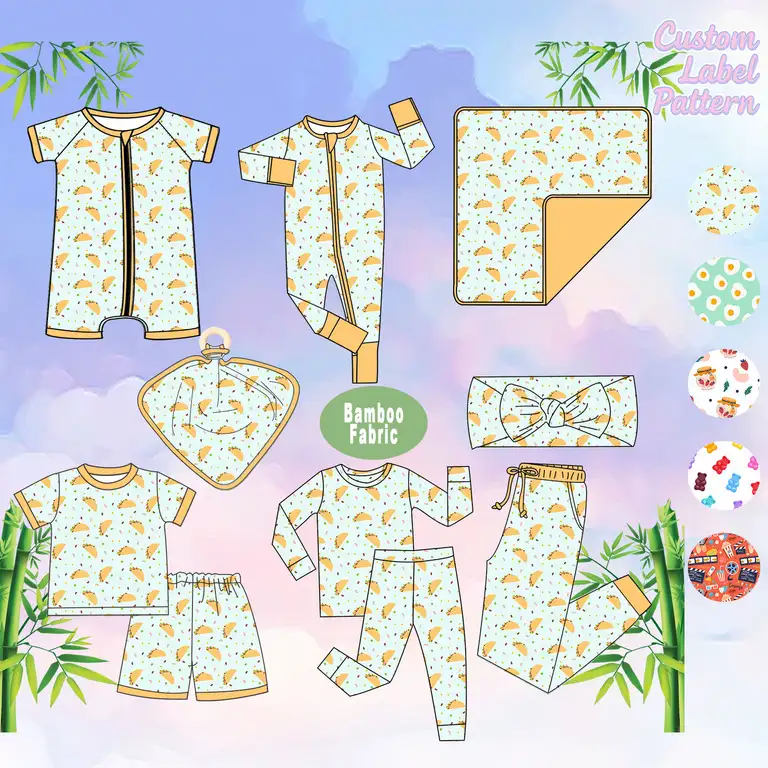
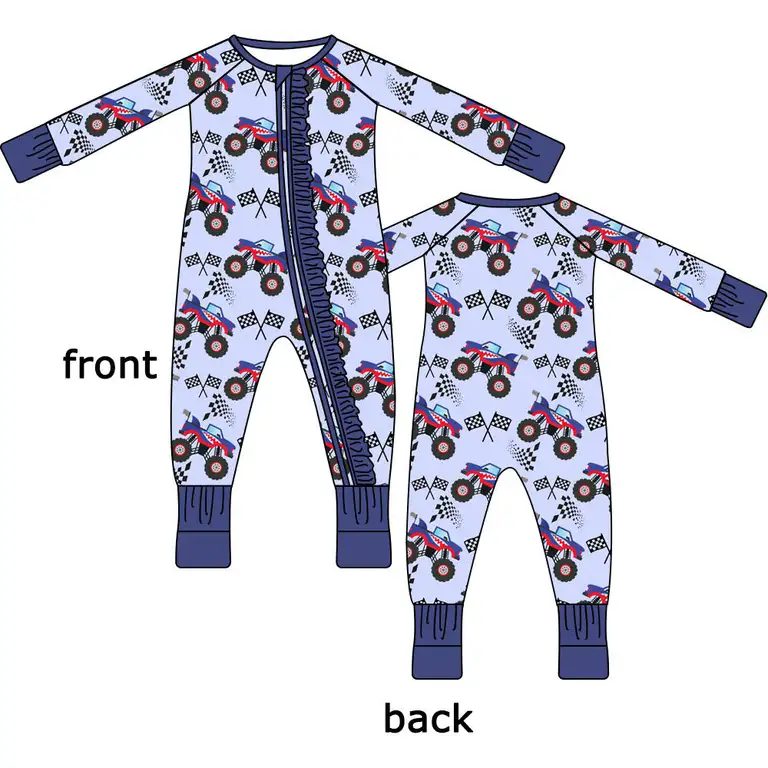
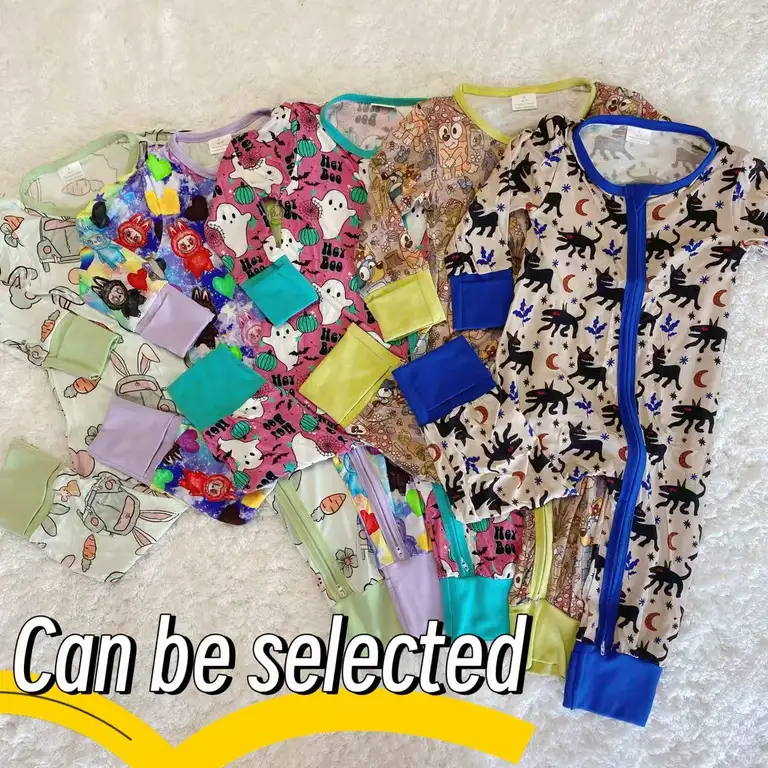
China Custom Pjs Kids Direct OEM Supplier
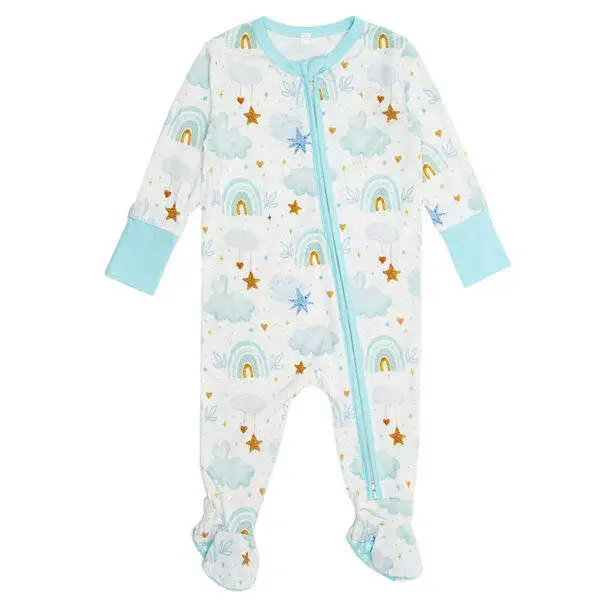
The production and distribution of custom pjs kids involve navigating one of the most heavily regulated consumer product categories. Children's pajamas are subject to stringent compliance requirements under the Consumer Product Safety Improvement Act (CPSIA) and the corresponding need for a Children's Product Certificate (CPC). These mandates enforce rigorous checks, ranging from fabric flammability compliance to pull-test evaluations. Manufacturers and suppliers of custom pjs kids OEM Custom Design must prioritize legal precautions, not only to safeguard end-users but also to mitigate legal risks posed by non-compliance.

Understanding CPSIA Requirements for custom pjs kids
The CPSIA sets mandatory safety standards for children's products, including custom pjs kids. Key focus areas of CPSIA compliance include the following:
- Lead Content Restrictions: CPSIA limits total lead content in surface coatings to 90 ppm. This rule applies directly to embellishments, trims, zippers, buttons, and prints used in custom pjs kids.
- Phthalates Compliance: For children's sleepwear, CPSIA and ASTM F963 require that fabric and accessories such as elastics, prints, and embellishments used in custom pjs kids contain less than 0.1% of specific phthalates.
- Flammability Standards: All children's pajamas, including custom pjs kids, must meet federal flammability standards specified under CFR 1615/1616. These standards test fabric resistance to ignition and burning behavior to mitigate fire risks.
Manufacturers producing custom pjs kids OEM Custom Design must fully integrate these compliance checks during design, materials sourcing, and production. Both laboratory testing and documented certification are required for compliance demonstration.
Children's Product Certificate (CPC) Basics
The CPC serves as legal proof that custom pjs kids meet CPSIA's standards. A CPC must be issued for every production lot of custom pjs kids and should include details such as the product's manufacturing origin, testing facilities, and results. Key data points to incorporate are:
- Manufacturer or importer details, including mailing address and contact information.
- Production lot identification (e.g., Batch ID, SKU).
- Specific regulations, such as CFR 1615 for flammability or ASTM F963 for accessible elements and accessories.
- Third-party CPSC-accredited testing laboratory information.
Failure to issue an accurate and complete CPC for custom pjs kids is considered a violation, subjecting brands and manufacturers to recalls, fines, and other legal repercussions.
Pull-Testing for Garments and Components
Ensuring no part of custom pjs kids detaches under reasonable force is a critical compliance criterion. Pull-tests evaluate the strength and durability of trims, including buttons, snaps, zippers, and decorative items. Guidance per ASTM F963 demands that attachments on children's clothing shall withstand a pull force of 15 lbs (67 Newtons) for 10 seconds without becoming loose or detaching.
Evaluate the following during pull-testing:
- Button attachment: Buttons on custom pjs kids need reinforced stitching or mechanical fixing to pass pull tests reliably.
- Elastic seams: Waistbands in custom pjs kids OEM Custom Design must exhibit stitch integrity to hold against stretching and tugging.
- Decorative components: Any rhinestones, pom-poms, or appliques require adhesive or stitched reinforcement compliant with ASTM pull-testing standards.
Conducting routine in-line pull tests during production and final AQL inspections (preferably under AQL 2.5 standards) ensures that defective custom pjs kids are preemptively identified.
Mitigating Legal Risks in custom pjs kids OEM Custom Design
Manufacturers in the custom pjs kids segment face heightened legal and reputational risks stemming from safety violations. Strategic risk mitigation begins with continuous testing and comprehensive documentation protocols. Additional key measures include:
- Raw Material Traceability: Maintain records detailing supplier certifications and test reports for fabrics, zippers, coatings, and trims used in custom pjs kids.
- Consumer Watchgroup Audits: Proactively monitor recall patterns and findings by groups like the CPSC to identify potential vulnerabilities in similar custom pjs kids OEM Custom Design.
- Recalls Preparedness Plan: Develop a documented plan addressing communication, consumer replacement, and root-cause analysis in case of recalls involving custom pjs kids.
- Testing Frequency: Batch lot testing of critical safety components should be aligned with AQL standards and supported by third-party lab certifications for each production cycle of custom pjs kids.
Compliance Checks Along the Supply Chain
The production lifecycle of custom pjs kids is replete with quality control touchpoints. From material sourcing to pre-shipment inspection, every stage must align with CPSIA, CPC, and flammability directives. Some best practices include:
- Incoming Materials Inspection: All fabrics, threads, and components should undergo incoming quality checks. Visual inspections, tensile strength testing, and pilling-resistance verifications are vital.
- Factory Audits: Conduct periodic supplier audits assessing stitching integrity, cleanroom status, and adherence to assembly sequences set per SOPs. Ensure that factories producing custom pjs kids OEM Custom Design possess updated compliance certifications.
- Pre-Shipment Inspection (PSI): A PSI should cover all variables, including CPC documentation, labels, flammability tests, and pull-test reports on packaged custom pjs kids.
An effective monitoring strategy ensures cross-functional teamwork between designers, procurement officers, and compliance departments, thereby safeguarding custom pjs kids OEM Custom Design against enforcement lapses.
Labeling and Tracking Compliance for custom pjs kids
Precise and legally compliant labeling is a non-negotiable requirement for custom pjs kids. Manufacturers must ensure that leading product information is permanently affixed to the pajamas in accordance with CFR guidelines. Required label elements include:
- Manufacturer Details: Name and address of the entity responsible for compliance.
- Tracking Information: Batch ID, lot coding, or serial numbers matching CPC documentation for identification of production timelines.
- Care Instructions: Care labels must comply with ASTM D5489 standards and display washing, drying, and ironing advice specific to custom pjs kids.
Additionally, labeling must be legible and child-resistant, ensuring that it does not become detached during normal wear or washing of custom pjs kids OEM Custom Design.
Flammability Standards Revisited
The most discussed feature of custom pjs kids pertains to flammability risk, governed by rigorous testing under CFR 1615/1616 protocols. A swatch of fabric is subjected to ignition under controlled conditions. Chain-stitch integrity, GSM weight thresholds, and snug-fit pattern grading are all critical determinants of pass/fail classification.
Here are some actionable tips for compliance:
| Base Composition | Pima 184nd Gen |
| Lead Time | 42 Days |
| Eco Index | 90% Certified |
| Quality Audit | SGS |
| Core Textile Field | Rts Retro Mystery Bundle Bamboo Pajama |
| Core Production Range | Organic Bamboo Pajama |
- Fabric Weights: Use fabrics exceeding 7 oz/sq yd for loose-fit styles of custom pjs kids, as heavier fabric weight exhibits improved flammability resistance.
- Snug-Fit Design: Opt for tapered and elastic cuffs to minimize airflow, reducing burn propagation risks in custom pjs kids OEM Custom Design.
- Post-Wash Testing: Conduct flammability retests on pre-aged fabric swatches subjected to 50 wash cycles to confirm long-term compliance for custom pjs kids.
Addressing Failure and Corrective Actions
If any batch of custom pjs kids fails safety testing, immediate quarantine and internal review procedures must activate. Common corrective action plans entail:
- Root Cause Identification: Analyze data logs and supplier inputs to isolate failure points in raw materials or assembly lines.
- Product Rework: For CPC violations in custom pjs kids OEM Custom Design, separate non-compliant units and rework under documented oversight.
- Testing Escalation: Enhance frequency of accelerated testing protocols for subsequent batches to ensure ongoing compliance for custom pjs kids.
Conclusion of Documentation and Legal Compliance Recording
Consistent documentation practices define the difference between proactivity and reaction in the compliance landscape. Every custom pjs kids batch's testing reports, production notes, and safety validations must remain archived for five years, as required by CPSIA enforcement policy.