Leading Top Wholesale Footie Baby Rompers Manufacturer
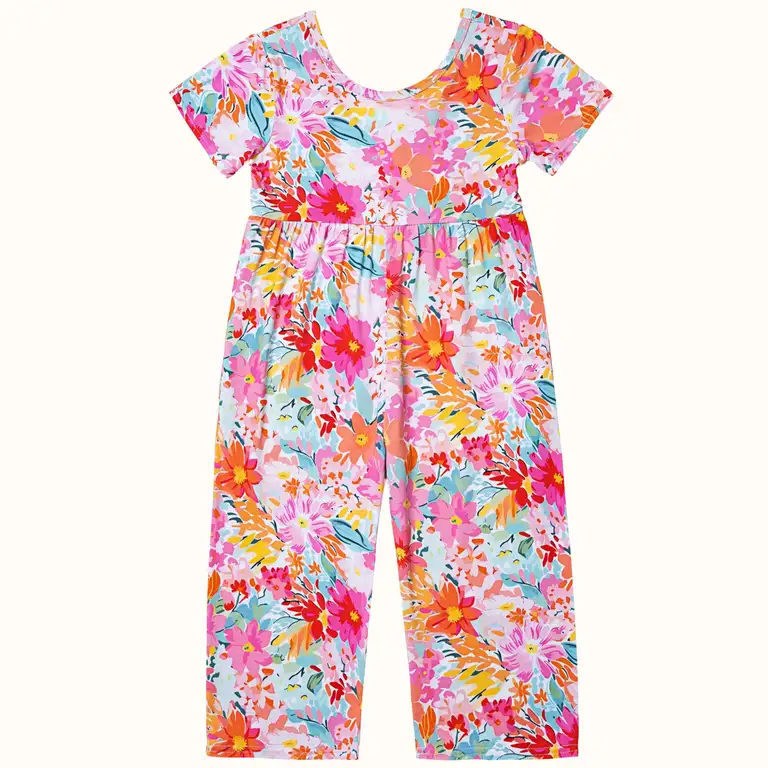
Section 1: CPSIA Compliance for footie Baby Rompers
The Consumer Product Safety Improvement Act (CPSIA) mandates specific standards for children’s clothing, including footie Baby Rompers. Manufacturers, importers, and distributors targeting the U.S. market must adhere to stringent legal and safety benchmarks. For footie Baby Rompers, CPSIA compliance centers on three primary areas: lead content restrictions, phthalates limitations, and small-part hazards.

1.1 Lead Content Testing
All components of footie Baby Rompers, including zippers, snaps, buttons, and thread pigments, must meet lead content restrictions. CPSIA requires a total lead content of no more than 100 parts per million (ppm) in accessible parts. Testing methods for footie Baby Rompers must comply with CPSC-CH-E1003-09.1 for textile substrates and CPSC-CH-E1001-08.3 for metal or non-metal components.
1.2 Phthalates in Plastics
Plastic components in footie Baby Rompers, including appliqués, are subject to phthalate regulations under CPSIA. Testing must demonstrate that eight regulated phthalates do not exceed 0.1% of the total component weight. Laboratories accredited by CPSC should perform testing per ASTM D3421 or equivalent protocols.
1.3 Small-Part Hazards
For footie Baby Rompers designs targeted at children under three years, small parts, if detached, can pose choking hazards. Rigorous testing in accordance with 16 CFR Part 1501 is mandatory. Product designs incorporating snaps, buttons, or detachable bows necessitate validation through production sample trials and third-party laboratory testing.
Section 2: Children’s Product Certificate (CPC) Laws
Footie Baby Rompers require a CPC under CPSIA regulations before they can be marketed for consumer use. A Certificate of Compliance verifies compliance through accredited third-party testing per CPSIA standards.
2.1 Structure of the CPC
The CPC for footie Baby Rompers must include the following required details:
- Identification of the product, e.g., "footie Baby Rompers, SKU #XYZ123456”.
- Citations of applicable child safety regulations such as 16 CFR 1501, 16 CFR 1500.48, and ASTM F963 (where applicable).
- Manufacturer’s name, address, and contact information.
- Details of the testing laboratory, including CPSC accreditation number and address.
- Date and place of production testing and certification.
2.2 Record Retention for Wholesale and Bulk Suppliers
For businesses engaged in footie Baby Rompers Wholesale Bulk Supply, records of CPCs must be retained for a minimum of five years following production. Digital databases, indexed by SKU, are critical to ensuring immediate retrieval and compliance with federal requirements during inspections.
Section 3: Pull-Test Testing for footie Baby Rompers
The pull strength of attachments is a critical factor for compliance and safety in footie Baby Rompers. Buttons, snaps, zippers, and decorative or functional elements must withstand forces applicable under normal use and foreseeable misuse.
3.1 Testing Standards
ASTM F963 and 16 CFR 1500.51-53 outline pull-strength requirements for children’s garments. Hardware on footie Baby Rompers must withstand forces of 15 lbs. for infants and 20 lbs. for toddlers without detachment or failure. The use of Mark-10 force gauge instruments is recommended for precision during pull-test testing. Adhering to AQL 2.5 standards ensures batch sampling meets both statistical and safety criteria.
3.2 Common Failure Points
- Thread failure arising from inappropriate lockstitch tension. Multiplied stitching redundancies at stress points prevent detachment risks.
- Snap and button misalignment. Products should undergo manual inspection and plug gauge testing pre-distribution.
- Improper hardware sourcing. Metal and plastic snaps should undergo durometer and tensile strength testing during procurement.
Section 4: Legal Risks Associated with footie Baby Rompers
Poor compliance outcomes introduce liability streams and recall risks for footie Baby Rompers and suppliers operating in footie Baby Rompers Wholesale Bulk Supply. The Consumer Product Safety Commission (CPSC) enforces penalties, including bans, legal actions, and financial penalties, for non-compliance.
4.1 Recalls
Statistical monitoring of defect volumes beyond AQL tolerances—a critical metric for footie Baby Rompers—serves as early fraud detection in the value chain. Common recall triggers include failure to meet small-part hazard regulations (16 CFR 1501) and pull test requirements (ASTM F963).
4.2 Product Liability Claims
Firms engaged in footie Baby Rompers Wholesale Bulk Supply are subject to product liability lawsuits stemming from choking injuries, chemical contact from hazardous dyes or materials, and any potential safety lapses. Comprehensive public-liability insurance for consumer products is advisable to mitigate such scenarios.
Section 5: Manufacturing Considerations for footie Baby Rompers
Manufacturers of footie Baby Rompers should ensure tightly controlled production variables to minimize risks.
5.1 Stitching Integrity
Lockstitch precision is critical for reinforcing seams. Mechanized sewing equipment calibrated to ISO 4916 flatlock standards ensures uniform strength for footie Baby Rompers.
5.2 Material Compliance
Textile composition in footie Baby Rompers must adhere to flammability standards under 16 CFR part 1610. Cotton blends should undergo pyrotechnic testing for material ignition properties and chemical treatment residues.
5.3 Labeling and Traceability
CPSIA section 103 mandates labeling containing traceability codes for each production batch. Standard reference models for footie Baby Rompers include heat-sealed tagging, polymer decals, or sublimation printing.
Section 6: Global Import/Export Considerations for Suppliers of footie Baby Rompers Wholesale Bulk Supply
Trade regulations impacting footie Baby Rompers Wholesale Bulk Supply align with both national and international safety laws. Compliance with WTO Technical Barriers to Trade (TBT) policies ensures product integrity during distribution.
6.1 Additional Testing Standards
Textiles subjected to transport must adhere to ISO 3758 standards regarding fabric shrinkage, colorfastness, and abrasion resistance. For footie Baby Rompers, factories in export zones must provide a Certificate of Origin and Material Safety Data Sheets (MSDS) upon request from customs officials.
6.2 Batch Inspections at Ports
Harmonized System (HS) Code 6111.20, applicable to footie Baby Rompers Wholesale Bulk Supply, classifies the products under children’s apparel for customs processing. Inspection agencies, both private and government-mandated, perform AQL assessment upon import entry.
| Eco Index | 92% Certified |
| Premier Production Requirement | Summer Bamboo Baby Sleepsuit Hospital Newborn Gift Set Sensitive Skin Bamboo Romper |
| Target Wholesale Metric | Mommie & Me Clothes |
| Quality Audit | Intertek |
| Lead Time | 34 Days |
| Base Composition | GOTS Cotton 867nd Gen |
Section 7: Thermal and Chemical Safety Standards for Textile Printing
Vivid print designs remain popular across footie Baby Rompers. However, sublimation and screen printing methods must conform to ASTM D5034 tear strength and chemical migration thresholds to ensure toxin-free prints.
7.1 Restricted Substances Verification
The use of regulated pigments and azo dyes requires conformity under REACH 1907/2006 standards for export markets involved in footie Baby Rompers Wholesale Bulk Supply. Testing processes must verify fabric coatings, ensuring the absence of formaldehyde, heavy metals, and bisphenols.
7.2 Flame Resistance Standardization
Decorative elements on footie Baby Rompers, such as lace trims, must not violate 16 CFR 1615 for flame-resistance in children’s sleepwear. Pre-market validation testing should accompany production alongside burn-rate calculations reported as part of batch QC review protocols.